
Table of Contents
//CPR is a training that can be a well-paying career and it’s a practical way to become a Health and Safety Educator. While considering becoming a CPR instructor, you could be interested in CPR accreditation, first aid courses, emergency response courses and more for people, schools and organizations.
CPR certification training has become an essential business these days since many of today’s workplaces simply demand an individual get this training. It appears that anyone in practice in the medical field or in the position as as a teacher or fitness trainer must possess a knowledge of CPR. You can start a CPR instructing company that helps your community if you plan accordingly, get certified and purchase the proper equipment.
Knowing what it takes to train, being certified by a provider, how to establish the business, and marketing are all necessities before doing it. With adequate preparation anyone can become a good and successful CPR training center.
Knowing CPR Certification and Training Requirements
The first question you must ask yourself, how to start a CPR training business is the certification requirement. For teaching purposes it may be necessary to obtain a certification as a CPR instructor.
Most teachers are trained by a respected organization such as the American Heart Association (AHA), Red Cross CPR courses or an approved CPR instructor. These organisations can offer training for the instructors on how to conduct training, assessment and issue CPR certification cards.
Most individuals do need to take a basic CPR class prior to taking an Instructor level class. Healthcare experience is often a requirement of some programs; there are many, however, that take general applications.
After certification, you are eligible to conduct CPR classes, basic life support (BLS) classes and first aid training courses. It is important to keep your certification up-to-date in order to maintain credibility in your CPR instructor business.
Planning Your CPR training Business Structure
A well-defined business structure is essential for planning Business CPR.
A well-planned out CPR training is the foundation for a successful coaching enterprise of CPR. You must decide on how your company will run, who you’re going to serve and what you’ll be selling.
Beginners tend to begin their business by renting out a space to allow a small CPR training service to be arranged in schools, community centers or rented spaces. still others begin firms to travel to sites of business and organisations to give mobile CPR classes.
You will also need to decide the company structure you would like, dependent on local legal regulations, such as sole proprietor, LLC or registered business. Talk about self-publicizing your organization as a CPR training organization, you will build up trust and uphold a professional reputation.
It’s also crucial that you do background check on the neighborhood competition and need for CPR courses. Consider flexible schedules, group discounts or corporate packages of CPR training to stand out in a saturated marketplace.
Set up Equipment, Materials and Skills
When you are getting ready to use the equipment you are going to need to start your CPR training business, there are important and crucial factors you must take into consideration. Mannequins, AED trainers and instructional materials and first aid supplies will be needed for training.
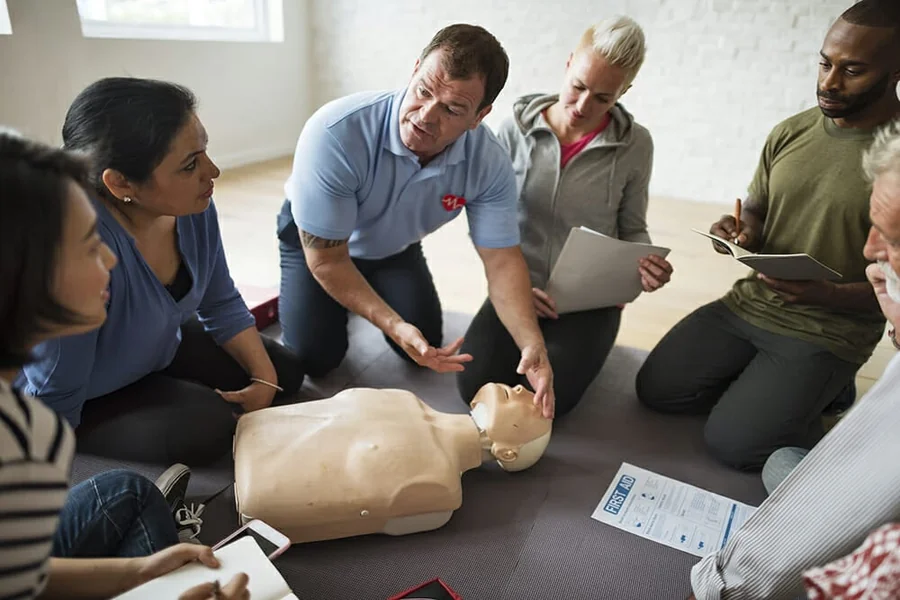
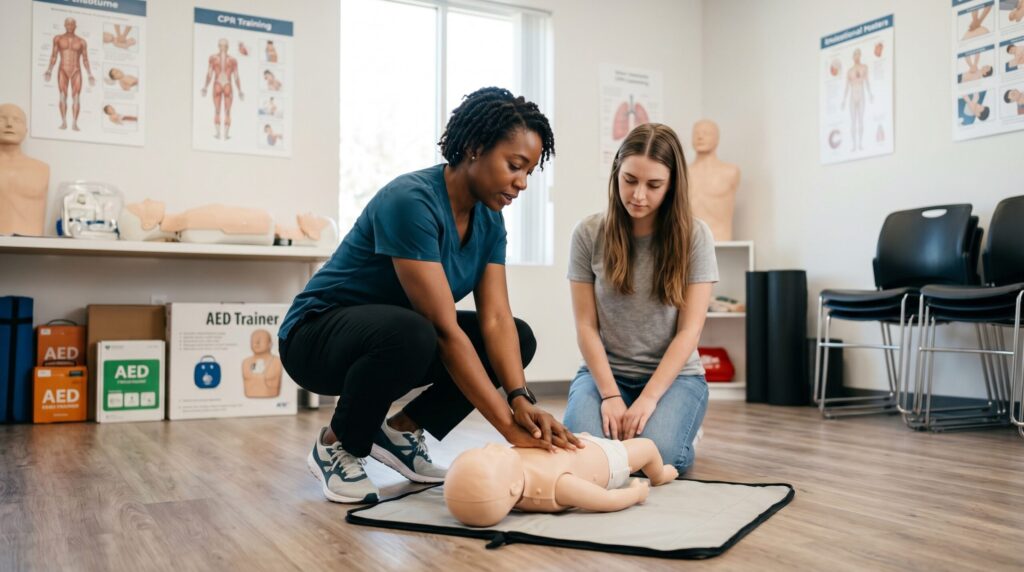
CPR manikins are used for learning the techniques of chest compressions and rescue breathing. These will prove to be vital equipment in the business set up for any CPR class. The various training levels may need to be represented by adult, child and baby sized models.
Another necessary item of kit is an AED (Automated External Defibrillator) trainer. It’s implemented to train students how to act should they encounter a real defibrillator in an emergency situation.
Also there will be a need for some manuals and slides to print out and for certification forms. Digital CPR training software may be used by some instructors to keep record of the students and their completion of the course.
A well cleaned-up and tidy training environment enhances the learning experience. Many people start their CPR training business in a rented home, community hall or rented classroom.
Pricing, Certification, and Course Structure
In the establishment of a CPR training certification business, pricing is crucial. Typically the prices vary based on the different type of courses offered, the course location, and level of certification.
The basic CPR and first aid training courses may be less expensive, while the advanced BLS training course for healthcare workers can be more expensive.
Any class formats (solo, group classes or corporate packages) are available. Often companies prefer to have CPR training on-site for staff, and this too can boost your earning potential.
All courses to include practical, theory and assessment. Once students successfully complete, they have CPR certification cards or digital certificates.
Renewal courses is also a wonderful method to build repeat customers. Many certifications will be due again every 2 years.
Marketing Strategies for Your CPR Training Business
Marketing is a big success contributor to expanding a CPR training business. It will be difficult to find some traction with students and organisations if it is not being promoted.
This is best achieved by developing a business site that has information about your CPR certification classes, the pricing and when the classes are offered. The option to book online can streamline the sign-up process.
Average social media are equally great. The elements of CPR training tips, safety awareness material and success stories can all help to build trust and visibility.
A strategic partnership with schools, gyms, health centres or even corporate office can assist in acquiring regular customers as well. One of them is a corporate contract, many companies are required to train their staff in CPR.
Other ways to target potential students include local advertising, flyers and community events. Word of mouth recommendations are especially potent in any CPR-instructor enterprise.
The Legal Aspects and Company Compliance
You have to make sure your CPR training business fulfils lawful needs prior to getting operational. This includes registering a business, certifying an instructor and insurance coverage.
Insurance is essential and you’re passing on lifesaving skills. Safeguards your business in the event of accidents or claims.
Some areas may have health or education authorities to approve certified CPR courses. Before commencing work the local requirements must be vetted.
It’s also important for consistency and a polished look to have great record keeping of student certification and training sessions.
Compliance is important in order to maintain trust and smooth running of your CPR training services.
Final Thought
Not only is it a profitable business opportunity, but CPR training can be a service that will help improve your community in the process. Instructor certification, quality CPR training equipment and marketing strategies can make for a good and successful business.
This subject is growing as an increasing number of companies, schools and organizations require certified CPR training. Your CPR certification company could be profitable and rewarding if you put an emphasis on professionalism, safety education and good teaching.
FAQs
What is the first step in how to start a CPR training business?
The first step is getting certified as a CPR instructor through an approved organization like the American Heart Association or Red Cross CPR training programs.
Do I need a license to start a CPR training business?
Yes, you usually need business registration and instructor certification depending on your local regulations.
How much does it cost to start a CPR training business?
Startup costs vary but typically include certification fees, CPR manikins, AED trainers, and marketing expenses.
Can I start a CPR training business from home?
Yes, many instructors start a home-based CPR training business and later expand to larger venues.
What equipment is needed for CPR training classes?
You will need CPR mannequins, AED trainers, first aid kits, and training materials.
How do CPR training businesses make money?
They earn through individual classes, corporate training sessions, group courses, and certification renewals.
Is CPR instructor certification required?
Yes, you must be a certified CPR instructor before teaching and issuing certifications.
How can I get clients for my CPR training business?
You can attract clients through websites, social media marketing, partnerships, and local networking.