

Table of Contents
//One of the simplest methods of eating well, saving money and keeping the energy through the workday is preparing a healthy working lunch. You can have a balanced lunch while in the office, when you work at home or while commuting to different meetings to stay in focus and to avoid the urge to take up fast foods and snacks offered by the vending machines. By ensuring a steady supply of energy rather than the slump that usually follows a heavy meal or one rich in fatty foods, nutritious midday meal can also help in improving productivity.
Healthy work lunches include healthy fats, lean protein, whole grains and colorful vegetables. They need to be more convenient to cook, easier to carry and good enough to make you full till your next meal. Luckily, to make healthy lunches, expensive products, and complex recipes are not necessary. A bit of planning can help you to make great meals and they are in-time and are in-taste.
This guide provides tips on how to make lunchtime fun and healthy, and includes tips on how to work-related or meal-planning lunches.
Why Healthy Work Lunches Matter
Lunch is more than just a break in the day. It furnishes your body with goodness to sustain you to work effectively in the afternoon.
Avoiding lunch or dining on extremely processed food can result in you getting fatigued, distracted or hungry soon after. Sugar and high carbohydrate foods contain lots of refined carbohydrates and added sugars, thus leading to a rapid increase and decrease in energy levels.
A moderate lunch assists in concentration, enhances moods and prevents fluctuations in blood sugar levels throughout the day.
It also helps you to get more control over ingredients, portion size, and nutrition when you prepare your own meals.
Numerous homemade lunches are more veggies, low-fat proteins, and fiber and less superfluous sodium, saturated and added sugar.
Another benefit is financial savings. Lunch packing can really save a lot of money on the food bill each week as opposed to buying a meal each working day.
The healthy eating habits that are practiced at workweek are usually transferred to other aspects of life.
What Makes a Balanced Work Lunch?
A able lunch consists of a combination of nutrients but it does not only emphasise on a food group.
The meal should be based on lean protein since it aids in muscle maintenance, in addition to enabling you to stay longer without feeling hungry. Chicken, turkey, tuna, eggs, tofu, beans, lentils and Greek yogurt are all good options.
Whole grains contain slow-carbohydrates that give long lasting energy. Popular ones are brown rice, quinoa, whole wheat pasta, whole grain wraps and barley.
Vegetables not only provide vitamins, minerals, antioxidants and fiber but also more volume to a meal without causing too many calories.
Foods like avocado, nuts, seeds, or olive oil are also healthy fats that add flavor and aid in satiety.
Fresh fruit will be a great addition since it will fill sweet cravings and will serve as a source of natural vitamins and hydration.
A combination of these foods helps to make lunches, that are satisfying and balanced.
Easy Healthy Work Lunch Ideas
Grilled chicken and brown rice, along with roasted vegetables have remained one of the most dependable meal prep combinations. It has a long storage shelf, is easy to reheat, and offers increased nutrition.
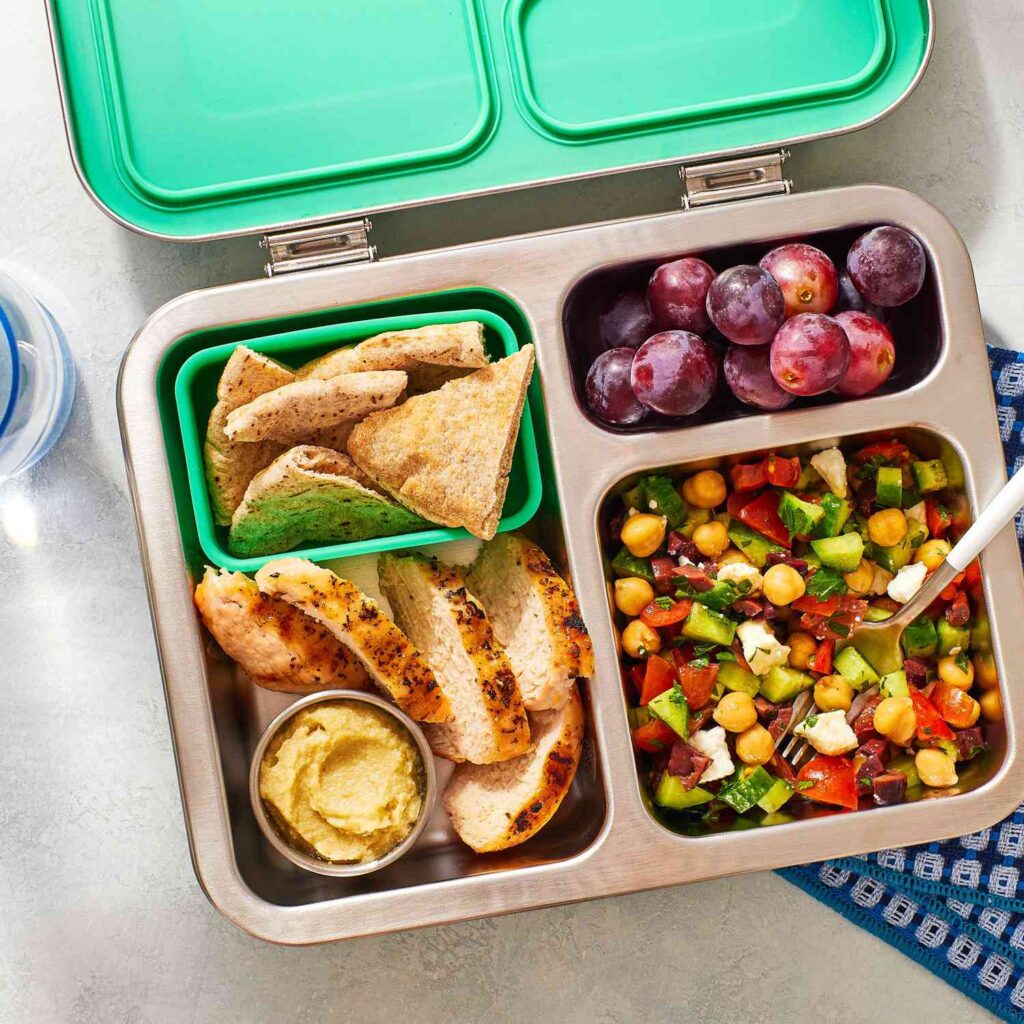
A quinoa salad with chickpeas, cucumbers, tomatoes, spinach and a light lemon dressing is a refreshing meal to have lunch and it also tastes the same when mixed but chilled.
Wraps that have whole wheat and are loaded with sliced turkey, lettuce, tomato, cucumber and hummus are convenient portable meals that fit into hectic schedules.
An egg soup of vegetables and beans and whole grain bread makes a warm cozy meal in the colder seasons.
Salmon with roasted sweet potatoes and steamed broccoli is a healthy source of fats and high-quality protein.
Another easy meal preparation could be pasta salad made using whole wheat pasta, grilled chicken, colorful vegetables and light olive oil dressing.
To make merrier lunches, whole grain crackers are recommended to be combined with fresh fruit and Greek yogurt with berries, nuts and seeds.
Even homemade dinners that remain can be transformed into excellent work lunches in the event of being packed in convenient containers.
Meal Prep Tips That Save Time
Healthy eating can also be very easy during hectic workdays by preparing a few lunch boxes at once.
Select one or two proteins and prepare more extended portions, which can be cut into portions.
The use of several roasting vegetables together will save time and make the meal of various combinations of colors.
Preparing a staple grain like rice or quinoa offers an easy starting point to various dishes throughout the week.
Put store lunches in airtight containers to preserve fresh ingredients and to make transportation easier.
Ahead of time preparation of fresh vegetables will also promote healthier day snacking as well.
Simple sauces or dressing can be kept in different containers to ensure that one keeps them fresh until lunch time.
Weekly rotation of ingredients can also prevent the boredom, as well as provide a more significant nutritional variation.
Preparing meals every day makes life a little easier, and the stress from cooking every day can be lessened with the help of a regular meal preparation ecosystem.
Common Mistakes to Avoid
A lot of individuals make lunches without knowing that they end up hungry soon after lunch.
The first error is to solely consume salads and exclude adequate amounts of protein or good fats. Although it is necessary, vegetables alone might not be a great source of permanent energy.
High levels of energy in the afternoon can also be lowered by avoiding carbohydrates altogether. Having whole grains over refined carbohydrates tends to be a better long-term energy source.
Excessively large portions can cause afternoon drowsiness and excessively small portions can cause unnecessary afternoon snacks.
The other error is to forget hydration. Water and 1-2 glasses of water with lunch assist in digestion and general well-being.
Most convenience foods that are highly processed are more than convenient as they are usually high in sodium, unhealthy fats and added sugar.
The time constraint also aids in avoiding the urge to buy foods that are less healthy when time runs out.
Involving minor adjustments in the long run results in the form of sustained healthy dietary practices.
Final Thought
One of the most practical methods of enhancing your every-day nutrition as well as supporting your energy and productivity and your well-being is preparing healthy work lunches. You can make star meals that are satisfying and keep you energetic in the busiest of days by combining lean protein, whole grains, vegetables, healthy fats and fresh fruit.
Food preparation does not need to be sophisticated. With accessible recipes, good ingredients and some planning, we can easily have quality homemade lunches, which are very delicious and affordable. Bringing your own lunch also offers more control over nutrition and saves unnecessary finances spent in restaurants.
Healthy work lunches can be integrated into your daily routine whether you are planning a whole week of meal prep or the night before, it can be a pleasing experience. Simple and regular decisions can have the most significant impact in leading a balanced lifestyle in the long-term.
FAQs
What makes a healthy work lunch?
A healthy work lunch typically includes lean protein, whole grains, vegetables, healthy fats, and fruit for balanced nutrition.
Can I prepare work lunches ahead of time?
Yes. Many lunches can be prepared several days in advance and stored safely in the refrigerator using airtight containers.
What protein is best for work lunches?
Chicken, turkey, tuna, eggs, tofu, beans, lentils, and Greek yogurt are all excellent high-protein options.
How can I keep my lunch fresh?
Use insulated lunch bags with ice packs when refrigeration is unavailable and store meals in sealed containers.
Are salads enough for lunch?
Salads can be satisfying when they include protein, healthy fats, and whole grains rather than vegetables alone.
How do I avoid getting bored with meal prep?
Rotate proteins, vegetables, grains, and seasonings each week while trying new recipes to keep meals interesting.
Can healthy work lunches save money?
Yes. Preparing meals at home is often much more affordable than buying lunch every workday while giving you greater control over ingredients and portion sizes.